Embroidery thread colors affect design visibility, brand consistency, texture, and the appearance of finished stitches. The right shades help you reproduce logos accurately, create realistic artwork, and coordinate embroidery with fabric. An embroidery thread colors chart helps you identify shades by number, name, and color family, while conversion charts help you find alternatives across manufacturers. Quality Care Digitizing helps businesses and embroiderers prepare designs for accurate, consistent machine embroidery.
This guide explains how to use thread charts, match colors across brands, build effective palettes, and select suitable shades for different projects.
1. Understanding Embroidery Thread Colors
Embroidery thread colors range from basic neutrals to bright, pastel, metallic, and variegated shades. Manufacturers organize colors into numbered systems so you can identify specific threads and reorder the same shade when needed.
Most thread collections include five main color families:
Warm colors: Crimson, scarlet, coral, orange, and yellow.
Cool colors: Royal blue, turquoise, emerald green, and teal.
Purples and pinks: Lavender, violet, fuchsia, and blush.
Earth tones: Chocolate brown, camel, khaki, and tan.
Neutrals: White, cream, gray, charcoal, and black.
Specialty collections include metallic gold, silver, fluorescent shades, glow-in-the-dark threads, and variegated colors. Each option produces a different visual effect, so choose a thread according to the artwork, fabric, and intended finish.
2. Embroidery Thread Colors Chart and Conversion Systems
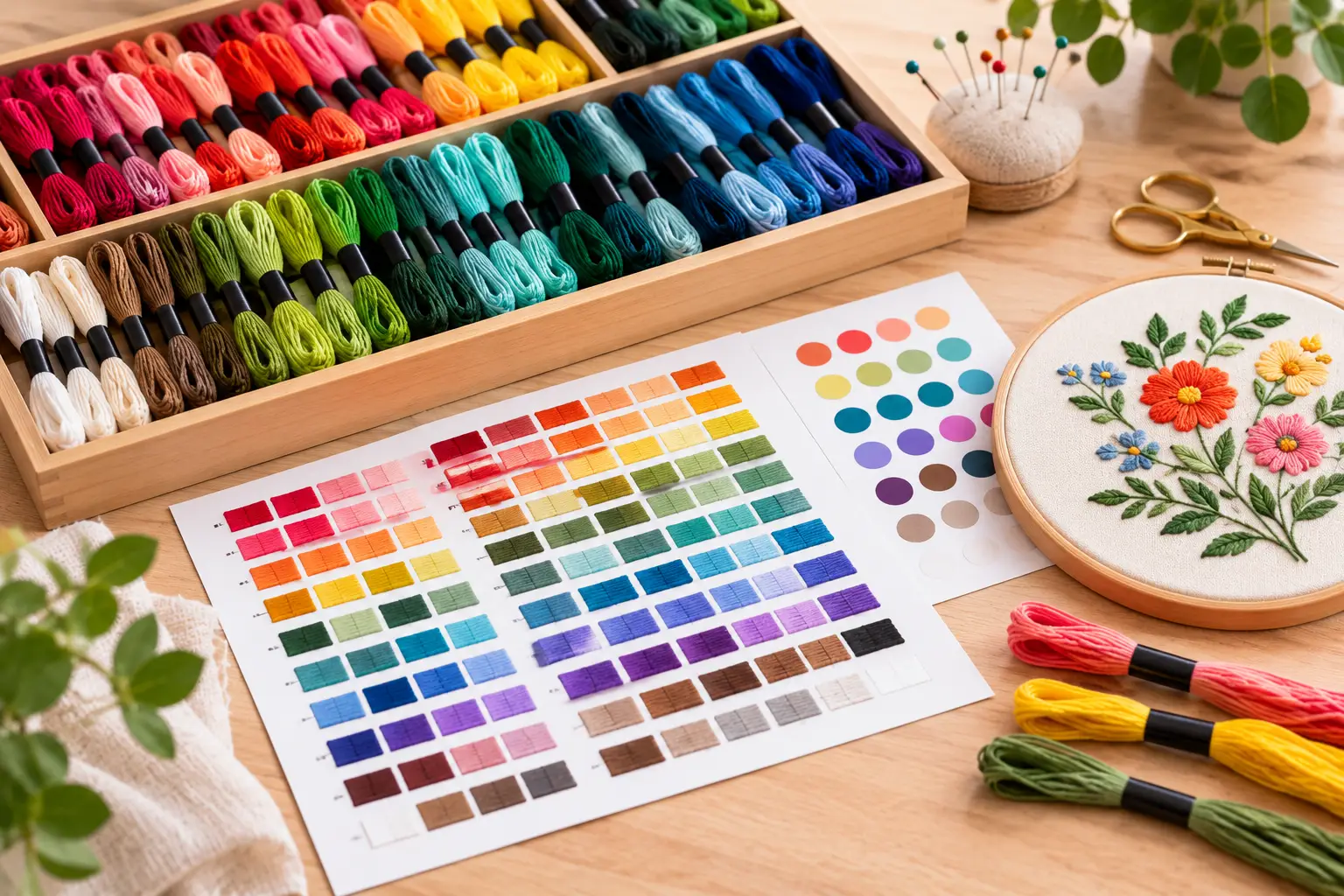
An embroidery thread color chart connects a manufacturer's shade names and numbers with physical or digital color references. Use a chart to identify a required thread, plan a palette, or find a substitute when your preferred shade is unavailable.
DMC Thread Color Chart
DMC is a widely used reference for hand embroidery and stranded cotton floss. Its core stranded cotton range contains hundreds of shades, commonly referenced through a numbered system. For example, DMC 310 identifies black, DMC 666 identifies bright red, and DMC 977 identifies light golden brown.
DMC code
Color name
Typical application
310
Black
Outlines, lettering, and dark details
666
Bright red
Flowers, symbols, and bold accents
740
Tangerine
Orange details and warm motifs
973
Canary bright
Bright highlights and decorative shapes
3846
Light turquoise
Water, skies, and cool accents
317
Pewter gray
Shading and monochromatic artwork
white
White
Highlights and light details
The final row refers to white thread; select the correct manufacturer's white code when ordering. Always consult the relevant manufacturer's chart because names, availability, and numbering differ between product lines.
Machine Embroidery Thread Color Charts
Machine embroidery brands maintain separate numbering systems for polyester, rayon, cotton, and specialty threads. Isacord, Madeira, Sulky, Floriani, and Robison-Anton offer their own shade references.
Isacord provides an extensive polyester palette with color references useful for digital design work. Floriani offers thread charts and color-matching resources. Madeira supplies several machine-thread ranges, including Polyneon polyester. Sulky offers different thread types for machine and hand projects.
A code from one manufacturer does not automatically identify the same color from another. Check the thread line and fiber type before purchasing a substitute.
3. How to Match Embroidery Thread Colors
To match embroidery thread colors accurately, compare the thread with the actual fabric or approved brand reference under consistent lighting. A digital color value can narrow your options, but a physical sample provides a more dependable final check.
Follow these five steps:
Step 1: Identify the target shade. Use a physical sample, approved brand color, logo specification, or existing embroidery.
Step 2: Select the correct color family. Decide whether the target is red, blue, green, yellow, purple, or a neutral shade.
Step 3: Compare lightness and darkness. A thread with similar brightness often works better than a hue match that looks much lighter or darker.
Step 4: Check undertones. Two shades of blue may differ because one leans toward green while another leans toward purple.
Step 5: Test a stitch sample. Stitch the proposed color on the actual fabric and examine the result under the lighting used for the finished product.
For corporate logos, uniforms, and branded merchandise, confirm approved colors before production. Small shade differences can become noticeable across multiple garments.
4. Digital Charts vs. Physical Color Cards
Digital charts and physical color cards serve different purposes. Digital resources help you search quickly, while physical samples show the actual thread's appearance and texture.
Digital charts commonly display RGB values, hexadecimal codes, shade names, and manufacturer numbers. These details help you compare colors in embroidery software and prepare a palette before production. However, monitor calibration, screen brightness, and surrounding light can change how a digital swatch appears.
Physical color cards contain real thread samples. A physical card lets you compare sheen, undertones, and texture without relying entirely on a screen. For important projects, compare the card with the actual fabric under daylight and the intended indoor lighting.
Use digital references during planning and physical references for final approval. This approach reduces avoidable color mismatches.
5. Cross-Brand Thread Color Conversion
Thread color conversion helps you replace an unavailable shade with a similar color from another manufacturer. Conversion charts connect selected codes from brands such as DMC, Isacord, Madeira, Sulky, and Robison-Anton.
For example, a design may specify DMC cotton floss, while your embroidery machine uses polyester thread. A conversion chart can identify a possible alternative, but the result may differ in sheen, texture, and perceived color.
Use this process to convert thread colors:
Record the original brand, thread range, and color code.
Search a current conversion chart for the target manufacturer.
Compare the suggested shade with a physical color card.
Stitch a sample with the intended fabric and machine settings.
Approve the substitute before you begin full production.
Pantone references can help with corporate identity projects because brand guidelines often specify standardized colors. However, a Pantone-to-thread conversion remains an approximation unless the final thread has been physically verified against the approved reference.
6. Isacord vs. Floriani vs. DMC
The best thread brand depends on the embroidery method, material requirements, and color references supplied with your design.
Brand
Common use
Main consideration
DMC
Hand embroidery and floss projects
Extensive numbered cotton palette
Isacord
Machine embroidery
Polyester thread and digital color references
Floriani
Machine embroidery
Thread charts and color-matching resources
Madeira
Machine embroidery
Multiple thread ranges and conversion tools
Sulky
Hand and machine embroidery
Different thread weights and material types
Robison-Anton
Machine embroidery
Manufacturer-specific color codes
DMC is particularly useful when a hand embroidery pattern specifies floss numbers. Isacord and Madeira Polyneon are common choices for machine projects that require durable polyester thread. Rayon thread provides a different sheen and may suit decorative applications.
Do not assume that matching numbers indicate matching shades. Compare the fiber, thread weight, finish, and color reference before combining brands in one design.
7. Build a Color Palette for Your Project
A suitable color palette depends on the design's purpose, fabric color, and desired contrast. Choose colors with a clear visual relationship instead of selecting individual shades without considering the complete design.
Monochromatic Palette
Use different lightness levels of one hue. Black, pewter gray, and light gray create a restrained palette for lettering, line art, and understated logos. Several shades of green can provide depth in botanical designs.
Complementary Palette
Combine colors opposite each other on the color wheel, such as blue and orange or purple and yellow. Strong contrast helps decorative elements stand out. For small lettering, check readability before approving the combination.
Analogous Palette
Choose neighboring colors, such as yellow, yellow-green, and green. Related shades create smooth transitions in flowers, leaves, landscapes, and decorative patterns.
Neutral Palette
White, cream, gray, brown, and black work well for minimalist artwork and garments with complex patterns. Add one accent color when the design needs a clear focal point.
Seasonal Color Palettes
Autumn designs often use rust, mustard, dark green, and brown. Winter palettes may combine icy blue, white, silver, and deep navy. Spring motifs suit fresh green, blush pink, lavender, and soft yellow.
For each palette, select a dominant color, supporting shades, and an accent. Test the complete group on the intended fabric because fabric color changes the perceived contrast.
8. Embroidery Thread Color Trends 2026
Embroidery color trends in 2026 include earthy neutrals, saturated jewel tones, soft pastels, restrained monochromatic designs, and selective metallic accents. Treat these directions as creative options rather than fixed rules, especially when a brand guide specifies exact colors.
Earthy palettes combine olive, terracotta, tan, and chocolate brown. These shades suit botanical motifs, casual apparel, and nature-inspired designs. Jewel tones such as emerald, sapphire, burgundy, and deep purple create stronger visual contrast on suitable fabrics.
Pastels remain useful for delicate floral embroidery, children's clothing, and personalized gifts. Metallic gold and silver can highlight small details, borders, and decorative lettering, although metallic thread may require different machine settings.
Fluorescent and glow-in-the-dark threads suit projects that need visibility or a specialty effect. Sustainable design choices may pair nature-inspired colors with recycled or organic fabrics, depending on the project's material requirements.
Choose trends according to your audience and garment rather than replacing an established brand palette without approval.
9. Thread Color Blending and Shading
Color blending creates gradual changes in tone and depth. Hand embroidery can use several floss shades, while machine embroidery relies on digitized stitch direction, density, and color transitions.
For hand embroidery, choose three shades of the same color: dark, medium, and light. Use long-and-short stitches to create a gradual transition, with slight overlap between adjacent sections. Keep stitch direction consistent where smooth shading matters. Proper embroidery file preparation helps organize thread color changes and keeps the design ready for machine stitching.
For machine embroidery, use a design digitized for the intended thread sequence. The digitizer may adjust underlay, stitch density, stitch length, and overlap to control coverage. Simply layering multiple colors without suitable digitizing can create bulky areas or puckering.
Variegated thread combines multiple shades within one thread. This option adds color variation without requiring a separate spool for every shade. Test a sample first because the color sequence depends on stitch length and design scale.
10. Colorfastness, Storage, and Substitutions
Colorfastness describes a thread's ability to retain its color during washing, friction, and exposure to light. Thread performance depends on the dye, fiber, manufacturer, and care conditions.
Before using an unfamiliar thread on washable garments, stitch a small sample and wash the sample according to the garment's care instructions. Check for bleeding, fading, and transfer onto pale fabric. Do not rely on vinegar or home remedies as a guaranteed dye-setting method; follow the manufacturer's care guidance.
Store threads away from direct sunlight, moisture, dust, and excessive heat. Keep spools or skeins in labeled containers, organized by brand, range, and color number. Clear labels make substitutions easier and reduce accidental purchases.
Quality Care Digitizing helps businesses prepare embroidery designs for machine production and maintain consistency across repeat orders.
11. Common Thread Color Matching Mistakes
Four mistakes commonly affect embroidery color accuracy.
Choosing colors from a screen alone: Digital displays vary. Verify critical shades against physical samples.
Ignoring thread material: Cotton, polyester, and rayon reflect light differently. A shade that appears correct on a chart may look different when stitched.
Matching hue but ignoring value: Two colors can belong to the same family but have very different lightness levels. Check contrast on the actual fabric.
Skipping the production sample: A small test reveals problems with shade, coverage, and appearance before you commit to a large order.
For commercial embroidery, maintain a record of approved thread codes, fabric samples, and substitutions. Consistent documentation helps reproduce designs across repeat orders.
Frequently Asked Questions
How many colors of embroidery thread are there?
There are thousands of embroidery thread shades across manufacturers and product ranges. DMC's core stranded cotton collection contains hundreds of colors, while machine-thread brands offer separate palettes. The total varies by brand, thread type, specialty finish, and current product availability.
What are the color codes for different embroidery thread colors?
Embroidery thread color codes depend on the manufacturer and product range. For example, DMC 310 identifies black, DMC 666 identifies bright red, and DMC 740 identifies tangerine. Check the relevant brand chart before substituting another manufacturer's thread.
Can you provide a list of DMC thread colors?
Yes, DMC provides numbered color references for its stranded cotton floss collection, including 310 for black, 666 for bright red, 740 for tangerine, and 973 for canary bright. Consult the current official DMC chart for the complete shade list.
How to choose embroidery thread color?
Choose embroidery thread colors by comparing the fabric, design purpose, contrast, and approved color reference. Select a suitable palette, verify the shade with a physical thread card, and stitch a test sample. For branded products, obtain approval before production.
Halloween embroidery patterns let you create seasonal decorations, personalized gifts, clothing details, and small handmade keepsakes with basic needlework skills. You can choose cute ghosts, black cats, pumpkins, bats, witch hats, cobwebs, or detailed haunted houses, then adapt the colors and stitches to your project. For beginners, simple outlines and...
An embroidered beanie adds a personal touch to your winter wardrobe with custom flowers, initials, leaves, or geometric designs. You can embroider a knit beanie by hand with embroidery floss, a needle, and a suitable stabilizer, or use an embroidery machine for more detailed designs. The key is to control...
Learning how to embroider on a sweatshirt requires a suitable design, the right stabilizer, and careful fabric control. Sweatshirt fleece is thicker and stretchier than woven cotton, so preparation matters. With a home embroidery machine or hand needle, you can create a custom motif, name, border, or sleeve detail. Quality...
Bulk Christmas gift orders come with tight deadlines. Speed and accuracy matter more than ever during the holiday season. Vector artwork helps businesses complete large orders faster without sacrificing quality. Clean Artwork Reduces Preparation Time Vector files arrive clean and organized. They do not require heavy cleanup or redraws. This...
Christmas gifts need to look clean, polished, and professional. Vector files play a major role in achieving that quality. Without proper vectors, even the best gift idea can lose its premium feel. Clean Designs Start with Vector Artwork Vector files use smooth paths instead of pixels. This keeps artwork sharp...
Last-minute Christmas gifts still need to look thoughtful and premium. Digitizing makes fast customization possible without sacrificing quality. When time is short, embroidery digitizing delivers reliable and professional results. Why Digitizing Is Ideal for Urgent Christmas Orders Digitized embroidery runs quickly once files are ready. There is no drying time...
Christmas gifts should feel special the moment someone sees them. Digitized embroidery adds that premium touch through clean stitching and rich detail. Unlike basic decoration, professional digitized embroidery transforms simple items into high-end holiday gifts. Premium Gifts Start with Professional Digitizing Embroidery quality depends on how well a design is...
Are you searching for professionally digitized Christmas embroidery patterns ready for immediate use? There's no need to waste time with poor-quality designs or DIY digitizing struggles! A comprehensive pattern library with professionally prepared files saves time and ensures consistent quality. This guide will show you what makes a premium pattern...
Are you attempting to embroider intricate complex Christmas tree embroidery patterns this holiday season? There's no need to struggle with poor digitizing results! Quality digitizing transforms complex tree patterns into stunning embroidered artwork that customers treasure. This guide will teach you how professional digitizing makes the difference based on technical...